September 10, 2026
Best Manual Coffee Grinder: How to Choose the Right One
Updated on: 2026-09-10
A manual coffee grinder can be the most controllable tool in your brewing routine. The right grinder helps you dial in grind size, reduce heat buildup, and preserve flavor clarity. In this guide, you will learn what to evaluate, which styles fit different brew methods, and how to avoid common purchase mistakes. You will also see a practical buyer checklist to select the best manual coffee grinder for your kitchen and taste goals.
Introduction
Choosing the best manual coffee grinder is not only about whether it grinds beans. It is about repeatability, flavor preservation, and ease of dialing in. When you grind at the moment of brewing, coffee begins to taste brighter and more balanced. Manual grinders also offer a quieter experience and often use durable burr systems that support long-term use.
This article explains the key specifications that matter for everyday grinding. You will learn how burr type affects extraction, how grind consistency influences cup clarity, and how to match grind range to your brew method. You will also find practical steps to dial in settings and maintain performance.
Product Spotlight
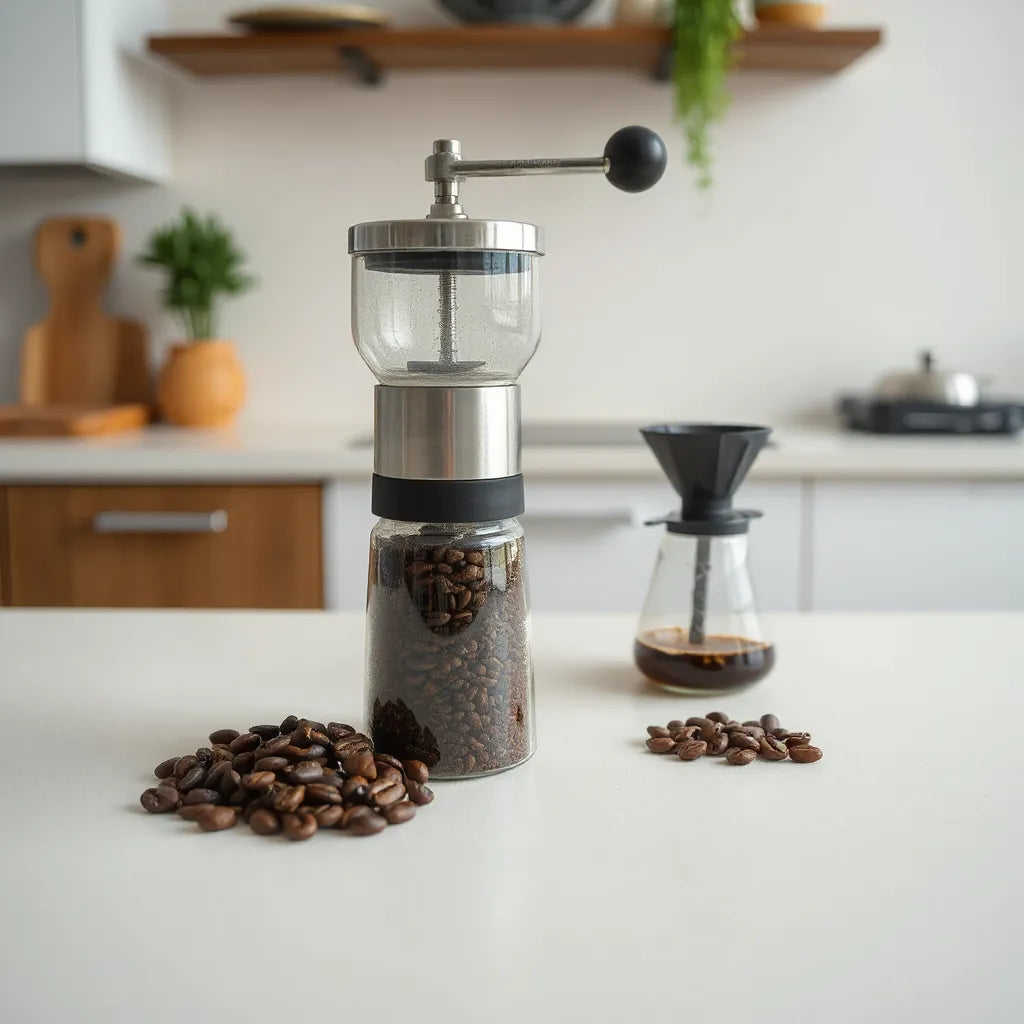
A strong manual grinder should feel steady, grind consistently, and provide meaningful control over grind size. One standout option in this category is the Timemore X Millab M01 Coffee Grinder, which is designed for clarity and workflow. It offers an adjustable grind mechanism that supports fine-to-medium ranges suited for popular brew styles such as pour-over and many espresso-like preparations, depending on user technique and target recipe.

Adjustable ring concept and measured grind flow
Beyond adjustment, the M01 class of grinders is typically valued for thoughtful ergonomics and a simple operating rhythm. Many users prefer manual grinding because it encourages consistency: you can pause, check progress, and stop at the exact moment you have enough grounds. That control can help you avoid over-extraction caused by stale or uneven particles. If you want a grinder that supports methodical dialing in, this style is a good fit.
Timemore X Millab M01 Coffee Grinder

Timemore X Millab M01 Coffee Grinder
The Best Manual Coffee Grinder: How to Choose
The phrase best manual coffee grinder can mean different things for different households. Some people want maximum grind uniformity for pour-over. Others focus on speed, storage, or easy cleaning. The most reliable approach is to evaluate the grinder against your brew method, your taste preferences, and your tolerance for manual effort.
1) Burr type and alignment: the foundation of consistency
Burr grinders typically outperform blade grinders because they produce fewer large fragments and less dust. For manual models, look for conical or flat burr designs from established brands. Conical burrs often produce a slightly fuller mouthfeel and can be forgiving across different beans. Flat burr systems can emphasize clarity and separation when properly dialed in. Regardless of shape, stable burr alignment and a solid grinding path are key to reducing drift across repeated grinds.
Consistency is not only about what size it makes. It is also about how often it makes that size. A grinder with repeatable settings helps you maintain extraction balance when you switch between light and medium roasts.
2) Grind adjustment style: micro-steps matter
Many manual grinders include numbered settings. Those numbers are helpful as a starting point, but what matters most is how finely the adjustment changes. Micro-step mechanisms can reduce the frustration of overshooting your target. If you brew multiple styles, you will benefit from a wider usable range and stable adjustment behavior.
When comparing grinders, consider how the adjustment feels during changes. Smooth adjustments with clear resistance can reduce accidental shifts during daily use.
3) Grind range: match it to your brew method
The grind range should fit your most common brewing. For espresso-style extraction, you need very fine particles and careful control. For pour-over and siphon methods, you generally want medium to medium-fine grinds with strong clarity. For French press, coarse grinds reduce sediment while protecting extraction.
Do not assume that “fine” on a dial automatically produces espresso-ready results. The actual particle distribution depends on burr geometry, adjustment steps, and seasoning of the burrs. If you brew multiple methods, prioritize grinders that cover your needs without forcing the mechanism to extremes.
4) Heat and flavor preservation
Manual grinding typically generates less heat than many high-speed electric grinders. Lower heat can help protect delicate aromatics, especially with lighter roasted beans. While heat is only one factor, it pairs with grind uniformity to support a cleaner cup.
In practice, a grinder that allows steady, controlled turning can reduce friction and maintain aromatic integrity. If you notice a harsh or muted flavor, reassess your grind size before blaming the beans.
5) Retention and ease of emptying
Grind retention is the amount of coffee grounds that remain inside the grinder after you stop. Lower retention can reduce waste and help you switch between beans faster. However, retention behavior can vary by design and user technique, such as tapping, brushing, or using a purge routine.
Look for grinders with straightforward cleaning access. A grinder that is simple to empty and brush will be used more often, which improves consistency across sessions.
6) Body comfort, stability, and workflow
Manual grinding is physical work, and comfort matters. Evaluate the handle design, the stability of the base while turning, and the ease of measuring grounds. If you grind daily for more than one cup, a stable workflow reduces fatigue and improves repeatability.
Choose a grinder that fits your routine. If you grind once per day, moderate effort may be acceptable. If you brew for multiple people, prioritize comfort and efficient burr geometry.

Brew method silhouettes and adjustment dial mapping
7) Build quality and long-term maintenance
Manual grinders are often built for durability, but maintenance still matters. Check for replaceable parts, clear cleaning steps, and materials that resist wear. A grinder that supports routine brushing and occasional deep cleaning can maintain performance over time.
Before purchasing, confirm that the brand provides guidance for maintenance and that the grinder design is accessible enough to clean thoroughly. That simple habit can preserve taste clarity and reduce stale residue buildup.
Practical buyer checklist
- Verify burr type and expected consistency for your brew method.
- Choose a grinder with a usable grind adjustment range, not only a broad label.
- Select a micro-adjustment system if you plan to dial in precisely.
- Prioritize ease of emptying and cleaning.
- Assess ergonomics if you grind for multiple cups.
- Plan for retention management when switching beans.
Myths vs. Facts
Myth: Finer grind always produces better coffee.
Fact: Grind size must match the extraction time and method. Too fine can cause over-extraction and bitterness, while too coarse can lead to sourness and weak flavor. The correct grind depends on brew temperature, contact time, and filter type.
Myth: Manual grinders are too slow for daily use.
Fact: Many manual grinders are fast enough for typical single-dose routines. The real difference is workflow design. A comfortable handle, stable base, and consistent grind output can make manual grinding practical.
Myth: One numbered setting is the same across beans.
Fact: Beans vary in density, roast level, and moisture. Your setting can be a starting point, but you should expect slight adjustments when changing roast or origin. What matters is repeatability and micro-step control.
Myth: Heat and flavor loss are only a concern for electric grinders.
Fact: Any grinding process can introduce friction and heat, but manual systems often remain cooler. Regardless of grinder type, your goal is consistent grinding without pushing the mechanism into uncomfortable resistance.
Frequently Asked Questions
What makes a manual grinder “the best” for home use?
The best manual coffee grinder for home use balances consistency, adjustment precision, and workflow comfort. It should produce stable grind size across repeated sessions and be easy to clean, so you maintain freshness and reduce residue buildup.
Which brew method benefits most from a manual grinder?
Pour-over, Aeropress-style brewing, and French press often benefit because fine control over grind size strongly affects clarity and body. Espresso-like preparations also require fine adjustment, though results depend on the grinder’s true fine range and technique.
How do I dial in grind size for better flavor?
Start with a practical baseline for your brew recipe. Change grind size in small steps, then evaluate taste for sourness, balance, and bitterness. If extraction feels weak, move slightly finer. If it feels harsh, move slightly coarser.
Do I need to weigh grounds every time?
Weighing improves repeatability. If you measure consistently, you can separate the effect of grind size from the effect of dose. Many users find that a scale improves results even when grind adjustment is the main variable.
Final Recommendations
If your goal is to select the best manual coffee grinder for dependable flavor, prioritize consistency and adjustment precision over marketing claims. Choose a burr system that matches your preferred brewing style. If you brew mostly pour-over, medium-fine control is valuable. If you brew French press, coarse range and clean separation matter more than extreme fineness.
Next, confirm that the grinder is comfortable to use daily. Manual grinding should fit your routine, not disrupt it. A grinder that is easy to empty and brush will help you avoid stale buildup and keep cups tasting fresh.
If you also enjoy curated home upgrades, you may find inspiration in the broader lifestyle range at WarmthWave . While it is not a coffee-focused site, it can be useful when you are designing a cohesive kitchen or beverage station.
Suggested setup approach
- Select a brew method you will use most often, then prioritize matching grind range.
- Pick a micro-adjustable model if you plan to switch between roasts frequently.
- Use a consistent dose and record your grind setting as a baseline.
- When changing beans, adjust grind by small increments and evaluate cup balance.
- Maintain hygiene with regular brushing and full emptying before switching coffee types.
Q&A Section
How can I tell whether my grinder produces consistent particles?
Consistency shows up in taste. If you repeatedly brew the same recipe with the same dose and grind setting and you get stable flavor, the grinder is likely producing uniform particles. If results swing widely, check your technique and consider whether your grind adjustment is too coarse a step or whether burr seasoning and retention are influencing each session.
Is it worth buying a grinder with micro-adjustments?
Yes, especially if you brew light roasts, vary origins, or switch between brew methods. Micro-adjustments help you correct small shifts in extraction. They also reduce guesswork when your beans change from one batch to the next.
What is the most common mistake when using a manual coffee grinder?
The most common mistake is changing too many variables at once. Many users adjust grind size, dose, and timing simultaneously. A more controlled approach is to keep your recipe stable, adjust only the grind size in small steps, and taste the difference. That method makes troubleshooting much faster.
About the Author
Snagva
Snagva specializes in practical home equipment guidance, with a focus on how material choices affect everyday performance. The expertise behind this article centers on grinder selection logic, workflow clarity, and maintenance habits that protect flavor quality. If you are building a more repeatable brewing routine, this guide is designed to support that goal. Thank you for reading, and may your next cup taste balanced and fresh.
The content in this blog post is intended for general information purposes only. It should not be considered as professional, medical, or legal advice. For specific guidance related to your situation, please consult a qualified professional. The store does not assume responsibility for any decisions made based on this information.