September 8, 2026
Handmade Kilim Runners: Styling Tips for Every Room
Updated on: 2026-09-07
Handmade kilim runners combine heritage weaving with practical everyday use. Their flat texture supports easy placement in entryways, hallways, and rooms where airflow matters. With the right care routine, these rugs keep their color clarity and pattern detail for years. This guide explains how to choose the correct size, position, and maintenance approach so you can get durable performance and lasting visual impact.
What Handmade Kilim Runners Are and Why They Work
How to Choose the Right Handmade Kilim Runner
Measure for Accuracy and Everyday Comfort
Match the Pattern to Your Space
Select Materials and Weave Quality
How to Install and Style a Kilim Runner in Your Home
Placement Rules for High-Traffic Zones
Use Padding and Traction Strategically
Coordinate Colors Without Overcrowding
How to Care for a Kilim Runner Without Damage
Routine Cleaning and Safe Spot Treatment
Deep Cleaning and Professional Support
What Handmade Kilim Runners Are and Why They Work
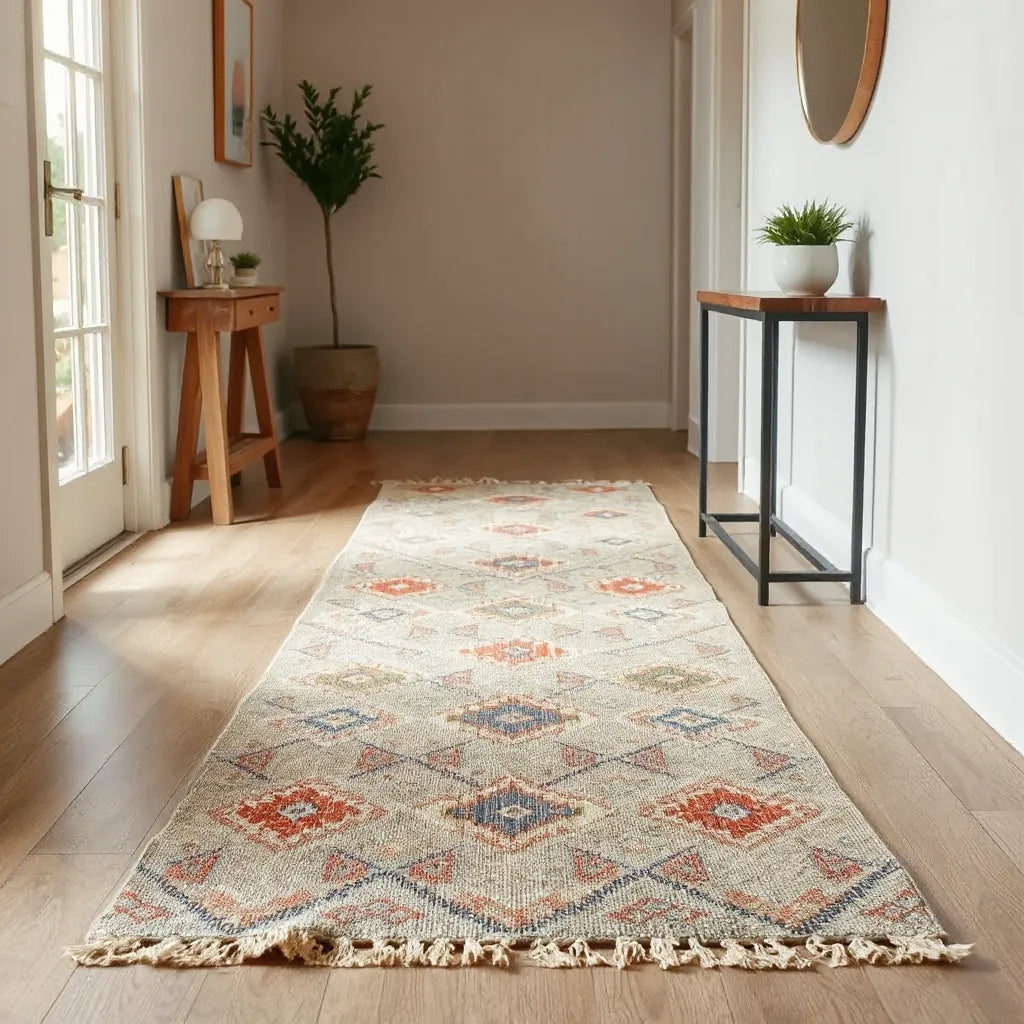
Handmade kilim runners are flat-woven textiles created on a loom using traditional methods. The result is a rug with clear geometric patterns, low pile height, and a design that feels structured rather than plush. This combination makes kilim runners especially useful for spaces where you want visual rhythm without bulky fabric that collects lint or blocks airflow.
Unlike many high-pile rugs, kilims typically lay closer to the floor. That feature improves safety and comfort in entryways and hallways, where people often step over edges and move furniture close to the ground. The flat weave also tends to resist certain types of everyday wear. When properly cared for, handmade runners can remain visually crisp even as they handle daily movement.
Another reason they work well is design versatility. Kilim patterns often incorporate repeating motifs, borders, and diagonal accents. These elements guide the eye along a hallway, while the flat surface supports styling with slim furniture and wall art. If you want a grounded look, a runner can unify different floor tones and help define circulation paths across rooms.

Geometric motifs, flat texture, hallway flow cues
How to Choose the Right Handmade Kilim Runner
Selecting the correct runner involves more than picking a favorite pattern. You need to balance measurements, aesthetic fit, and weave quality so the rug performs well in real life. A thoughtful choice prevents frequent repositioning and reduces the risk of uneven wear.
Measure for Accuracy and Everyday Comfort
Begin with the walking path. Measure the width of the corridor or entry area, then choose a runner width that leaves comfortable clearance on both sides. In most hallway setups, a runner positioned slightly off-center can look intentional when the pattern is symmetrical, but accuracy matters most for safety at door thresholds and transitions.
Next, consider the length in relation to focal points. A good rule is to extend the runner enough to guide movement, while still stopping before the rug becomes difficult to maintain at the edges. If the runner will be partially covered by furniture, measure the visible section carefully and allow for at least a small margin so the edges remain accessible for cleaning.
Match the Pattern to Your Space
Kilim patterns communicate character. If your room has strong design elements, choose a runner whose motifs match the level of visual intensity in the space. Busy interiors often benefit from a restrained color palette, while minimal rooms can handle bolder borders and higher contrast designs.
Pay attention to directionality. Many runners feature central medallions, step-like borders, or diagonal angles. These details can make a hallway feel longer, shorter, or more dynamic depending on how you align the pattern. Place the most visually impactful elements at natural stopping points, such as near a doorway or the start of an open living area.
Select Materials and Weave Quality
Quality is visible and practical. Look for tight weaving where the pattern remains sharp and the edges appear consistent. A well-made runner typically shows even tension and fewer loose threads. The flat pile also means that the surface texture should feel uniform, without dips or irregular waves that could create uneven foot placement.
Material choice influences how a runner ages. Natural fibers and balanced dye processes generally contribute to color stability. While all handcrafted textiles age naturally, solid construction usually retains its pattern clarity longer under everyday use.
If you want a complementary style approach across your home, pairing a runner with other woven accents can create continuity. For example, a coordinated accent rug or textile accessory can tie colors together without forcing a single dominant element. You can explore additional options from vintage Turkish kilim runner options to evaluate scale and motif variation.
How to Install and Style a Kilim Runner in Your Home
Installation and styling decisions determine how the runner sits, how it stays aligned, and how it interacts with surrounding furniture. A runner can look elegant with minimal effort, but traction and placement should receive attention to keep the surface stable over time.
Placement Rules for High-Traffic Zones
High-traffic spaces need clear alignment and edge management. Place the runner so that the top edge is visible when you enter the room, and so the bottom edge does not create a tripping hazard where it ends. If the runner crosses between rooms, keep transitions smooth and avoid abrupt height differences between floor coverings.
In living spaces, consider using a runner as a connector between zones. The runner can visually link a seating area to a dining path. If you use it near a table or in front of a doorway, ensure it does not interfere with furniture movement and does not block access to storage or cabinets.
Use Padding and Traction Strategically
Padding supports comfort and improves stability. A suitable rug pad can reduce slipping and extend rug life by lowering stress on the weave. Select a pad that matches the runner’s flat structure and provides traction without adding excessive bulk. If you use a pad, verify that it stays centered under the runner so the rug does not shift during daily walking.
When the runner is placed on smooth surfaces like hardwood or tile, traction matters most. Without it, the runner can migrate slightly, which eventually causes edge wear and uneven pattern alignment. A stable setup also makes vacuuming and spot cleaning easier because the rug remains in the same position.

Traction pad silhouette, centered placement, edge safety cues
Coordinate Colors Without Overcrowding
Color coordination should guide contrast, not compete with it. Start with the dominant tones in the room, such as wall color, wood finish, and large furniture fabrics. Then select runner colors that echo one or two key tones so the design feels integrated. For rooms with neutral walls, contrast in the runner can act as the visual anchor.
It is also wise to consider the pattern density in relation to nearby decor. Large wall art or textured upholstery can overwhelm intricate motifs. If the room already contains multiple strong textures, use the runner as the primary graphic element and keep other pattern choices quieter.
If you want a practical cleaning workflow, you can pair your runner care routine with smart household tools. For instance, the right maintenance kit helps you remove dust before it embeds in fibers. You can consider a dedicated cloth kit for gentle surface handling of nearby decor and frames, supporting a cleaner overall presentation around textile areas.
How to Care for a Kilim Runner Without Damage
Proper care protects both appearance and structure. A kilim runner can handle daily life, but it should not be cleaned with aggressive methods that disrupt dyes or stress the weave. Focus on gentle maintenance, controlled spot treatment, and consistent handling.
Routine Cleaning and Safe Spot Treatment
Begin with routine vacuuming using a suction-only approach or a vacuum setting without rotating brushes. Rotating brush heads can snag loose fibers or distort edge threads over time. Vacuum in the direction that follows the weave, and avoid pressing too hard on the surface.
For spills, act promptly. Blot the area instead of rubbing. Use a clean, dry cloth to lift excess moisture and prevent the liquid from spreading into the weave. If further cleaning is required, use a mild solution designed for textiles and test it on a hidden corner first. The goal is to reduce residue that can attract dirt later.
When you are removing dust, you may also consider brushing lightly with a soft, clean tool. Keep the motion gentle and avoid pulling on the edge. After spot cleaning, allow the runner to dry naturally in a well-ventilated space. Do not apply direct high heat, as heat can affect dyes and weaken natural fibers.
Deep Cleaning and Professional Support
Deep cleaning should be occasional and handled with care. Handwoven textiles can shrink or distort if washed improperly. If the runner requires a thorough clean, consider professional services experienced with flat-woven rugs. A qualified cleaner will understand how to manage water saturation, drying time, and pattern protection.
Professional attention can be particularly helpful when stains are set, when the runner has accumulated deep grime, or when you want to refresh color without compromising the weave. Always communicate that it is a handmade kilim runner and share any known cleaning history so the service can choose the correct method.
Storage and Handling for Seasonal Needs
If you rotate runners seasonally, store them in a breathable container. Avoid plastic bags that trap moisture. Clean the rug first so you do not store dirt that can react with humidity. Roll the runner with the pattern on the outside or use a breathable wrapping method that prevents abrasion.
Also keep the runner away from direct sunlight for long periods. UV exposure can fade dyes. For items stored for months, check periodically to confirm that air circulation remains appropriate.
Common Mistakes to Avoid
Even well-intentioned care can lead to avoidable damage. Avoiding these mistakes helps keep your handmade kilim runner visually strong and structurally stable.
Using a brush attachment that rotates against the weave, which can loosen fibers and blur pattern edges.
Scrubbing spills, which spreads the stain and drives moisture deeper into the textile.
Skipping edge support by not using traction under the runner, which increases movement and wear at the ends.
Placing the rug in direct, constant sunlight without protection, which can reduce color clarity over time.
Over-washing or saturating the rug during deep cleaning, which can cause distortion in flat-woven constructions.
When you treat the rug as a textile rather than a disposable surface, it rewards you with consistent performance. Use the simplest cleaning method that achieves the goal, and treat the runner with patience. A steady routine is more effective than occasional aggressive interventions.
FAQ
How do I prevent a handmade kilim runner from slipping?
Use a rug pad designed for flat-woven textiles and verify full centering beneath the runner. Choose traction that provides grip without adding excess thickness. After placement, check alignment after the first few days of foot traffic, since settling can cause minor shifts.
What is the safest way to clean a spill on a kilim runner?
Blot immediately using a clean, dry cloth. Avoid rubbing because it pushes liquid deeper into the weave. If residue remains, apply a mild textile-safe cleaner and test it on a discreet area first. Allow the runner to dry fully in a ventilated space before returning it to regular use.
Can I vacuum a kilim runner regularly?
Yes, vacuuming is generally appropriate when done gently. Use suction or a setting that avoids rotating brushes. Vacuum along the direction of the weave and do not press aggressively, especially near fringes or borders.
Closing Thoughts
Handmade kilim runners deliver enduring style through craft, structure, and pattern clarity. When you choose the correct size, align the design thoughtfully, and maintain the surface with gentle cleaning, the runner becomes a reliable part of your daily environment. Treat it as a long-term textile asset, not a short-lived accessory. Begin with the basics today and build a simple care routine that preserves color, texture, and visual balance.
About the Author
Snagva is an online retail partner focused on home textiles and design-forward styling decisions. The team contributes practical guidance on how woven pieces fit real interiors, including selection criteria, placement strategy, and maintenance fundamentals. Their expertise supports a confident approach to choosing handmade textiles that look intentional and last. Thank you for reading, and take the next step toward a more refined, well-cared-for space.
Disclaimer: This article provides general home-care guidance. Handmade textiles vary by origin and dye behavior, so always test cleaning methods on a discreet area and follow manufacturer or professional instructions when available.
The content in this blog post is intended for general information purposes only. It should not be considered as professional, medical, or legal advice. For specific guidance related to your situation, please consult a qualified professional. The store does not assume responsibility for any decisions made based on this information.