September 7, 2026
How to Style Vintage Turkish Rugs for Any Room
Updated on: 2026-09-07
Vintage Turkish rugs are admired for their refined craftsmanship, expressive patterns, and long-lasting textiles. Buying one well requires more than choosing a design you like. You must evaluate condition, materials, and authenticity, then decide on the right cleaning and placement method for your home. This guide explains how to select, inspect, and care for a rug so it remains beautiful through everyday use.
How to Choose and Care for Vintage Turkish Rugs
Materials and Authenticity Checks
Sizing and Placement for Real-World Style
Introduction
Vintage Turkish rugs bring a distinct combination of artistry and durability to modern interiors. Their color balance, geometric motifs, and time-tested weaving methods make them practical for daily living while still offering a collector-level aesthetic. However, the term “vintage” covers a wide range of ages, weaving styles, and quality levels. Without a structured approach, buyers may choose a rug that looks appealing but underperforms in comfort, condition, or longevity.
When you understand what to look for, purchasing vintage Turkish rugs becomes a controlled decision instead of a guess. The same applies to ownership: correct cleaning, mindful placement, and regular maintenance prevent early wear and preserve visual clarity. This article provides a clear framework for evaluating rugs, matching them to your space, and caring for them responsibly.
How to Choose and Care for Vintage Turkish Rugs
-
Define your purpose before you shop. Decide whether the rug is meant to anchor a living room, protect a high-traffic walkway, or add warmth beside a bed. A clear purpose guides your size choice and your tolerance for patina.
-
Inspect the surface in natural light. Look for even wear, visible knots or weft structure (where applicable), and consistent pile response across the field. Identify any areas that appear flattened, frayed, or uneven.
-
Evaluate color behavior over time. Vintage rugs can exhibit color softening, natural dye variation, and selective fading. Favor rugs where the overall palette still reads as intentional rather than patchy.
-
Confirm edging and construction stability. Check border integrity, corner alignment, and the condition of fringes. Loose threads are common, but widespread instability can increase maintenance difficulty.
-
Plan placement to control wear. Use furniture placement strategies so the rug remains supported and does not slide. Sliding causes accelerated abrasion, especially at corners and along traffic lanes.
-
Use a simple maintenance routine. Vacuum with care, rotate when needed, and address spills quickly with blotting and appropriate cleaning methods. Avoid aggressive scrubbing that can disturb fibers.
Start with a targeted visual plan
Before you assess any specific vintage Turkish rugs, decide what “success” looks like in your room. Choose one dominant direction: either the rug pattern becomes the focal point, or the rug serves as a structured background that complements wall color and furniture finish. When the design role is clear, it becomes easier to evaluate pattern scale, contrast, and border prominence.

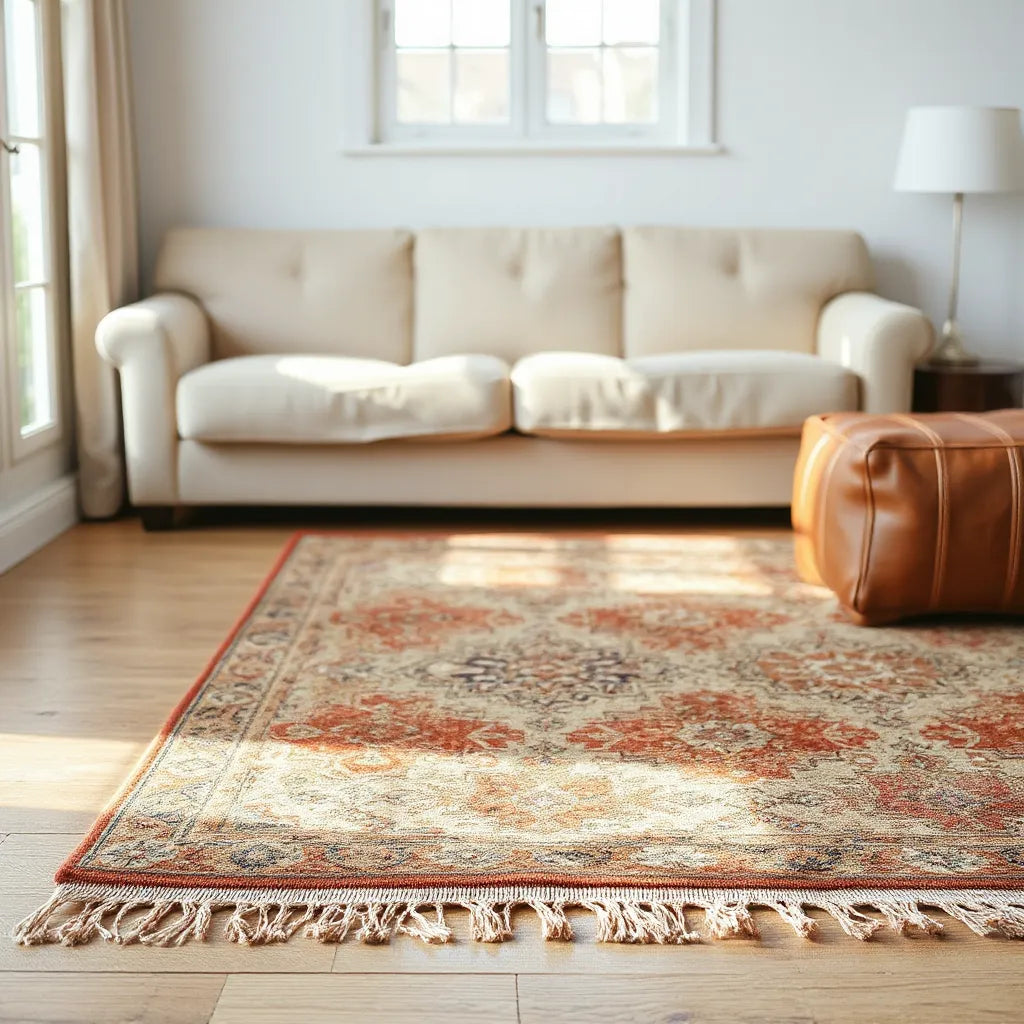
Geometric pattern, balanced colors, and wear indicators
Materials and Authenticity Checks
Authenticity is not only a matter of origin; it also concerns the way fibers behave and how the construction signals craftsmanship. When you review vintage Turkish rugs, concentrate on materials, knot density cues, and dye behavior rather than relying on labels alone.
Fiber identification through visual and tactile signals
Many vintage Turkish rugs use wool, which typically offers resilient texture and a natural color depth. Wool usually responds to light with subtle variations rather than an unnaturally uniform shine. If the rug has a pile, inspect whether the fibers appear consistent in thickness. If it is a kilim style (flatwoven), evaluate the clarity of the pattern and the tightness of weaving along edges.
For buyers without lab equipment, the goal is to detect obvious mismatches. A rug that appears overly synthetic in texture, shows excessive uniform reflectivity, or feels unnaturally stiff may not provide the same long-term performance as a wool-based textile. Treat this as a risk signal and request additional details if the seller cannot explain fiber composition.
Construction clues that reflect skilled weaving
In many woven traditions, consistent structure indicates time invested in technique. Examine border alignment and motif repetition. When the pattern repeats with clean geometry and stable spacing, it often suggests deliberate weaving rather than rushed fabrication.
Also check for signs of past repairs. Vintage rugs frequently undergo small mending or reinforcement. Minor repair work can be acceptable, especially if it is stable and visually controlled. However, extensive patching, large lifted areas, or repeated structural breaks can indicate a deeper condition issue.
Color and dye behavior, not perfect uniformity
Vintage textiles commonly show natural dye variation: the same color can appear slightly different across the rug, and the palette can soften with time. This is often part of the charm and does not automatically reduce quality. The concern is whether the variation creates visual distraction or suggests uneven cleaning history. A well-preserved rug usually reads as harmonious even with patina.
If you are exploring rug categories beyond vintage Turkish rugs, consider how complementary textile decisions affect the final look. For example, pairing a rug with well-chosen accents can help tie together color temperature and pattern energy. If you want a ready-made approach for a related support piece, you may review a matching accessory selection such as the small accent option that can align with the same design mood.
Sizing and Placement for Real-World Style
Correct sizing is one of the most practical ways to protect the rug’s visual impact. The wrong size can make even high-quality vintage Turkish rugs look cramped or visually detached.
Use room function to choose dimensions
In living rooms, a common strategy is to ensure the rug extends under key furniture legs so the space feels unified. For dining areas, allow enough clearance for chairs to move without catching the edge. In hallways or entry zones, prioritize full-length coverage where possible, because partial coverage can concentrate wear along the most walked lines.
Account for traffic lanes and edge vulnerability
Edges and corners experience accelerated wear from feet pressure, vacuum contact, and minor dragging. If your rug will face daily foot traffic, avoid placing it where it will be repeatedly brushed by doors or where pets frequently run in and out without a mat.
When the rug is placed on hard floors, use a suitable rug pad to prevent slipping and reduce abrasion. A pad also improves comfort underfoot and can minimize movement that leads to fraying over time.
Balance pattern scale with furniture complexity
Pattern scale determines how “busy” the space feels. If your furniture has strong silhouettes or multiple textures, a rug with a more controlled motif rhythm often integrates better. If your room is visually calm, a bolder border or stronger contrast in vintage Turkish rugs can add structure and character.

Room layout grid showing safe rug boundaries
Care and Maintenance That Protects Value
Vintage rugs are durable, but they are not maintenance-free. Cleaning and daily handling shape both appearance and longevity. The best plan is consistent, gentle, and responsive to spills.
Vacuuming and routine protection
Vacuum the surface regularly using a suction-only or low-aggression setting when available. High brush agitation can loosen fibers, particularly in older rugs or in areas that already show wear. Vacuum in the direction of the weave where possible to reduce friction.
Rotate the rug periodically if it receives stronger sunlight from one side. This evens out fading and helps preserve motif clarity across the field.
Spill response that reduces staining
Act quickly. Blot liquids immediately with a clean, absorbent cloth and avoid rubbing. Rubbing pushes material deeper into fibers and can spread the stain footprint. For solids, lift gently with a spoon or dull edge tool, then blot any residue.
After surface blotting, allow the area to dry naturally. If odor remains or staining persists, use professional cleaning. For high-value vintage textiles, a specialist in textile restoration provides a safer path than repeated at-home attempts.
Professional cleaning and when to choose it
Consider professional cleaning when the rug has widespread staining, persistent odor, significant discoloration, or heavy dust buildup that regular vacuuming cannot resolve. Also consider professional assessment if the rug has visible structural concerns such as lifting areas or recurring edge fraying. Professional service often protects color and construction integrity by using controlled methods.
Preventing wear from friction and sun exposure
Direct sunlight can fade even well-dyed vintage Turkish rugs over time. Use window coverings or rotate the rug strategically. Friction prevention is equally important: avoid frequent sliding, and keep entryways from dragging grit across the rug surface. A quality doormat can reduce particulates that abrade fibers.
Storing vintage textiles without damage
If you store a rug, clean it first to remove dirt that can settle into fibers. Roll it with the textile side protected and store it in a dry environment. Avoid compressing the rug tightly for long durations. If you must fold it, limit crease stress by placing clean barrier cloth between fold lines.
Where practical, complement rug care with careful cleaning of adjacent household textiles. For example, if you manage dust and debris systematically, you reduce the amount of particulate that settles into woven fibers. If you also maintain hard surfaces and electronics, you may find value in gentle cleaning tools designed for daily use, such as the screen cleaning kit for reducing fine dust transfer during routine maintenance.
FAQ
What makes vintage Turkish rugs different from newer rugs?
Vintage Turkish rugs typically reflect older weaving traditions, established dye behavior, and visible patina from time. While quality varies, the most distinctive difference is how the textile has aged: colors often soften in a balanced way, and the structure can develop a settled look that feels integrated rather than stiff.
How can I tell whether a rug is in good condition without special tools?
Start with visual inspection under bright, indirect light. Look for stable edges, consistent pattern clarity, and even wear across the main field. Then check whether the rug lies flat without prominent lifting or open separations. For texture, gently assess fiber response by touch in multiple areas, especially near corners.
Should I use a rug pad with vintage Turkish rugs?
In most cases, yes. A suitable rug pad helps prevent slipping and reduces friction that leads to premature wear. Choose a pad that offers grip without overly abrasive materials. For flatwoven rugs, prioritize stabilization and edge support so the weave is not stressed by movement.
What is the safest cleaning approach for spills?
Blot immediately with a clean cloth and avoid rubbing. Lift solids carefully, blot the area again, and allow natural drying. If the stain persists or if the rug shows widespread discoloration, seek professional cleaning to protect dye integrity and construction stability.
Closing Thoughts
Choosing vintage Turkish rugs is a process that rewards patience and observation. When you evaluate condition, materials, and construction cues, you reduce the risk of disappointing purchases and you improve the likelihood that the rug will perform beautifully in your home. With careful placement, gentle vacuuming, and prompt spill response, these textiles can remain visually compelling and structurally sound for years. Take one step today: inspect your current rug needs, measure the space accurately, and commit to a maintenance routine that matches the rug’s age and condition.
For a broader perspective on curated home accents, you can also explore Kg2g.store as you plan your next styling decision.
About the Author
The content in this article was prepared by a team associated with Snagva, with expertise in home textiles, selection guidance, and care-focused product education. The approach emphasizes practical inspection methods, responsible maintenance, and design integration for everyday living. This perspective supports buyers who want both visual impact and long-term value from vintage textiles. Thank you for reading, and take action to choose and care for your rug with confidence.
Disclaimer: This article provides general guidance for selecting and caring for vintage textiles. Results can vary based on rug construction, prior cleaning history, and household conditions. For high-value rugs or persistent stains, consult a qualified professional textile cleaner.
The content in this blog post is intended for general information purposes only. It should not be considered as professional, medical, or legal advice. For specific guidance related to your situation, please consult a qualified professional. The store does not assume responsibility for any decisions made based on this information.