September 19, 2026
Precision Coffee Grinding: Better Flavor, Every Cup
Updated on: 2026-09-19
Precision coffee grinding is the practical method of producing a consistent particle size for better extraction. When grind settings and dosing are controlled, brew water interacts with coffee more evenly. The result is improved clarity, balanced sweetness, and reduced bitterness swings. This guide explains how to choose the right grinder approach, dial in settings, and maintain equipment so performance stays stable over time.
- 1. Why Precision Coffee Grinding Changes Flavor
- 2. Product Spotlight: Timemore X Millab M01 Coffee Grinder
- 3. Step-by-Step How-To for Precision Grinding
- 4. Personal Experience With Grind Consistency
- 5. Maintenance and Workflow for Stable Results
- 6. Summary and Recommendations
- 7. Q&A Section
Why Precision Coffee Grinding Changes Flavor
Precision coffee grinding is about control. It means creating a narrow range of particle sizes so your brew extracts in a predictable way. In everyday brewing, inconsistency often comes from wide particle distribution, uneven dosing, or grinder drift between sessions. When those factors improve, coffee tastes more coherent. You notice it as cleaner cups, clearer aromatics, and less random bitterness.
Particle size directly influences extraction rate. Finer particles expose more surface area. That can increase sweetness when balanced, but it can also create harshness if extraction runs long. Coarser particles resist extraction and can taste thin or sour when water does not pull enough flavor. Precision grinding helps your brewer stay near the “sweet spot” without requiring constant correction.
Consistency also supports repeatability. If you brew the same recipe on different days, precision settings and stable grinder behavior reduce variance. For pour-over and espresso workflows, that consistency makes it easier to compare beans and roast profiles rather than trying to diagnose grind-related issues.
Even more important, precision supports proper filter behavior. Paper, cloth, and metal filters each respond differently to grind distribution. A tighter particle range reduces fines migration that can otherwise lead to muddier cups, especially in longer contact methods.

Visual map of grind sizes and extraction balance
Product Spotlight: Timemore X Millab M01 Coffee Grinder
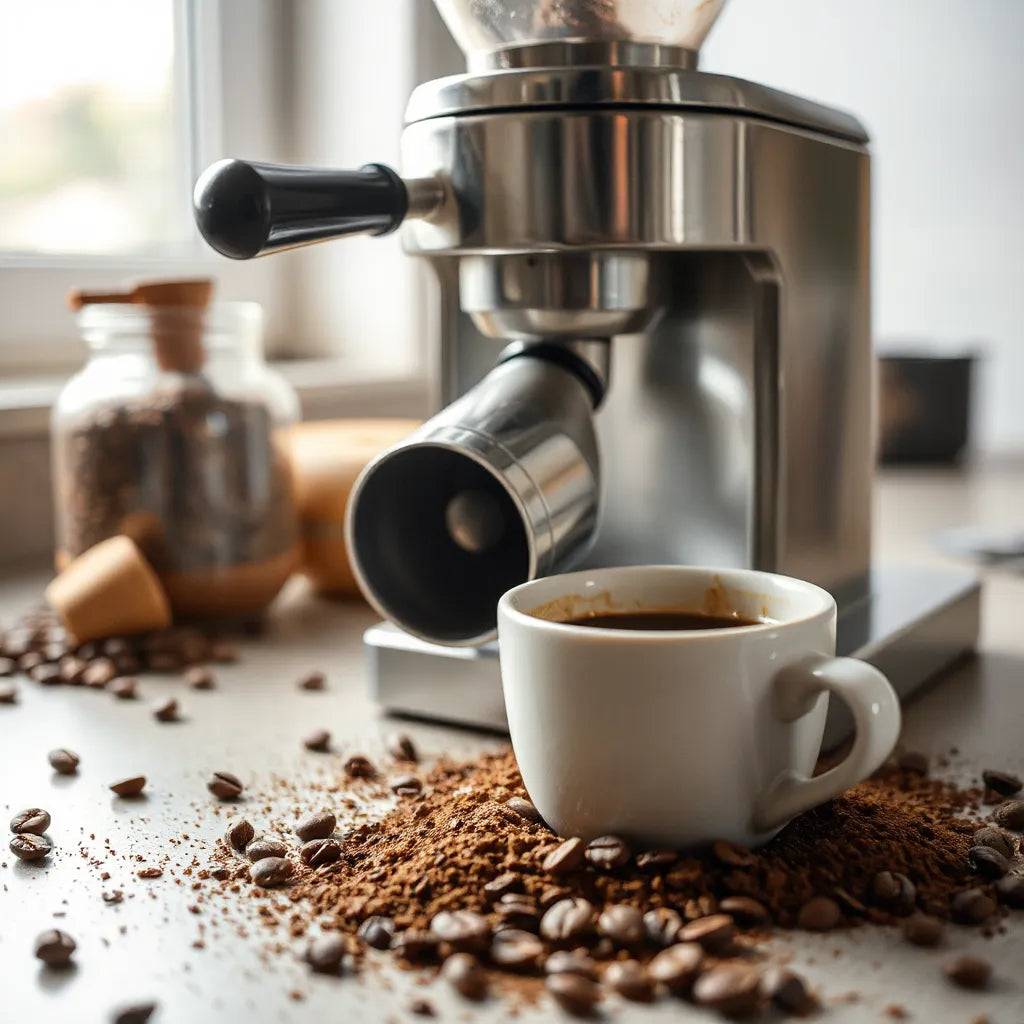
A precision workflow is easier when your grinder supports fine adjustment and repeatable output. One practical option is the Timemore X Millab M01 Coffee Grinder, which is designed for controlled grinding and comfortable day-to-day use. If you want to dial in systematically and maintain stable results, a grinder built for adjustment precision reduces the guesswork.
For many home brewers, the largest challenge is not knowing the goal. The challenge is achieving it consistently across sessions. When you can hold grind settings steady and maintain accurate dosing, your brewing becomes more about the coffee itself.
Timemore X Millab M01 Coffee Grinder

If you already own a grinder, you can still use the same principles: measure dose, lock in a setting, and record outcomes. That discipline turns experimentation into learning. If you are also evaluating brewing tools such as tampers or brewers, you can keep the workflow consistent across the whole setup.
For example, using a well-matched brewing station reduces changes at multiple stages. That is why many enthusiasts pair grind control with tools that support consistent contact time and dose stability. If you want another approach for dose and distribution control, consider reviewing related brewing accessories on Snagva to understand how method choices affect extraction behavior.
Step-by-Step How-To for Precision Grinding
Use this method to improve precision coffee grinding outcomes. Each step addresses a source of variation. Keep the process simple, and repeat it until your results become predictable.
-
Choose a target recipe and extraction method.
Decide on brew type first. Precision grinding is different for espresso, aeropress-style methods, and pour-over because water contact and flow dynamics differ.
-
Set an initial grind setting based on recent success.
Start from your last known good result for the current method. If you are starting fresh, choose a medium setting and adjust slowly after tasting.
-
Weigh the dose before grinding.
Precision begins with dosing accuracy. Use a scale with fine increments. Consistent mass reduces changes in extraction caused by coffee loading differences.
-
Grind with a stable technique.
Avoid rushing. Ensure the grinder completes its cycle fully. If your grinder design allows adjustment, keep the setting unchanged during a batch.
-
Confirm grind distribution by observing brew behavior.
For pour-over, watch flow rate and uniformity. For espresso, watch pressure behavior and shot timing tendencies. Treat these as indicators of particle distribution.
-
Make one adjustment at a time.
If you need a correction, change only grind size in small increments. Do not modify dose, water temperature, or ratio simultaneously. This isolates the variable and speeds up learning.
-
Record results with sensory notes.
Write down what changed and what you tasted. Look for directional trends such as “more clarity,” “less bitterness,” or “more sweetness.” Over time, you will build a personal dial-in map.
-
Repeat for at least three brews.
One cup rarely reveals the full picture. Repeating helps average out minor variations and confirms whether the new setting is truly stable.
Dial-in targets for different brew styles
Precision grinding should align with method goals. In pour-over, you typically want a balanced flow that avoids both channeling and stalled drips. In immersion-style brewing, you typically want even particle sizes that prevent over-extraction pockets and reduce sediment density. In espresso, the aim is stable resistance to water flow so extraction remains consistent across shots.
If you switch roast styles frequently, treat grind tuning as an ongoing process rather than a one-time setup. Lighter roasts often require finer settings for balanced extraction, while darker roasts may tolerate slightly coarser grinds to manage bitterness.

Checklist visual for grinder calibration and consistency
Personal Experience With Grind Consistency
In my own routine, the first improvement did not come from buying a new grinder. It came from changing the process. I used to adjust grind settings quickly, then keep moving other variables because the cup did not match expectations immediately. The result was confusion. Each adjustment felt like it “worked,” but the next brew often tasted different.
Once I started measuring dose every time and changing only one parameter per trial, the pattern became obvious. When grind size was too coarse, the cup looked bright but felt thin. When grind size was too fine, bitterness and drying notes increased. Precision coffee grinding helped me locate the middle. I also learned that small shifts can matter. A minor adjustment produced noticeable differences in clarity and sweetness even when brew time appeared similar.
The biggest win was repeatability. After a week of disciplined dial-in, I could switch between mornings and still expect stable outcomes. That stability matters because it makes the tasting experience more about the beans and less about equipment variability.
Maintenance and Workflow for Stable Results
Precision is not a one-time achievement. Grinders drift when they are not cleaned, stored properly, or used consistently. Retaining stable burr alignment, minimizing retained grounds, and managing static behavior all influence the final grind output.
Clean burrs and chute to prevent buildup
Oils and fine particles accumulate on burr surfaces and in the grinding path. Over time, buildup changes flow resistance and can shift grind distribution. A routine cleaning schedule improves precision grinding consistency. Use a method that matches your grinder design. Remove grounds from the hopper area, wipe accessible surfaces, and follow the manufacturer’s guidance for deeper maintenance.
Manage retention for consistent dosing
Every grinder retains some coffee between sessions. Retention affects the first dose after a change in beans. If you change roast or switch methods, consider grinding a small “purge” amount to reach a more representative output. This supports stable flavor rather than relying on the first shot or first cup.
Calibrate adjustments and protect settings
Adjustment rings can move accidentally. If your grinder has a lock or clearly defined adjustment mechanism, use it. Mark your preferred settings for each method and roast profile. The goal is not rigid control; the goal is controlled exploration.
Control environment factors that affect static and flow
Humidity, airflow, and static can alter how grounds behave during transfer. When grounds cling to surfaces, the effective dose changes and distribution may skew. Keep your workflow tidy and transfer grounds promptly. If you brew with paper filters, ensure filters are handled consistently and not pre-wetted unless your method requires it.
In the same spirit of controlled workflow, some brewers find value in organizing accessory kits for fast setup. This reduces the time between grinding and brewing, which can otherwise introduce variability. If you want a practical example of workflow-focused accessories, you may explore screen care tools as an example of how small maintenance habits support equipment longevity. While unrelated to coffee, the principle is consistent: reduce friction in your process so you can focus on brewing variables.
Summary and Recommendations
Precision coffee grinding improves flavor through consistent particle size distribution, accurate dosing, and controlled dial-in adjustments. When grind size, dose mass, and workflow remain stable, extraction becomes more predictable. Your cups should show improved balance, clearer aromatics, and less random bitterness variation.
To get practical results, use a repeatable method: weigh your dose, start from a known baseline, adjust only one variable at a time, and record sensory notes. Maintain the grinder by cleaning burrs and reducing retained grounds so performance remains stable over time. Treat dial-in as a learning loop rather than a one-time task.
If you want to explore a consistent approach to brewing accessories and home comfort tools, you may also visit LoveFairings for general inspiration on building a more organized daily setup.
Q&A Section
What is precision coffee grinding in practical terms?
It is the process of producing a consistent range of coffee particle sizes and delivering an accurate dose to the brewer. In practice, this means controlled grinder settings, reliable dosing, and a workflow that prevents accidental changes between trials. The goal is repeatable extraction rather than random taste variation.
How do I know whether my grind is too fine or too coarse?
If the coffee tastes overly bitter, dry, or harsh, the grind may be too fine for the method or contact time. If it tastes sour, thin, or lacking sweetness, the grind may be too coarse. Flow behavior, shot resistance, and sediment density can also provide direction. Make small adjustments and keep other variables unchanged for clear diagnosis.
Should I adjust grind settings for every bean change?
Not necessarily for every single brew, but it is common to adjust when roast level, freshness, or origin changes meaningfully. Many roasts require small tuning to reach balanced extraction. A structured dial-in routine helps you determine when the adjustment is required and when it is not.
How often should I clean my grinder for stable performance?
Cleaning frequency depends on usage volume and the level of oily residue from the beans. For most consistent outcomes, plan periodic cleaning and a routine wipe-down of accessible parts. If you notice flavor drift, slower grinding, or increased retention, increase cleaning effort and follow the manufacturer’s guidance for deeper maintenance.
Does precision grinding improve espresso more than pour-over?
Espresso is generally more sensitive to grind distribution because water is forced through the puck under pressure. However, pour-over also benefits substantially from consistency, especially for clarity and uniform filter behavior. The improvements are method-dependent, but precision principles apply across brewing styles.
About the Author
Snagva is a team and brand focused on practical home setup guidance and equipment literacy for brewing enthusiasts. Our expertise centers on process consistency, workflow design, and product evaluation for better at-home results. Thanks for reading, and we invite you to apply these precision principles to your next brew.
Disclaimer: This article provides general information about coffee brewing and grinder workflow. Individual results vary based on bean characteristics, equipment design, and user technique. Follow the safety and maintenance guidance provided by your grinder manufacturer.
The content in this blog post is intended for general information purposes only. It should not be considered as professional, medical, or legal advice. For specific guidance related to your situation, please consult a qualified professional. The store does not assume responsibility for any decisions made based on this information.