October 2, 2026
Vintage Turkish Kilim Runner Styling Ideas for Any Room
Updated on: October 2, 2026
A vintage Turkish kilim runner adds warmth, texture, and a distinct sense of heritage to everyday spaces. Unlike many mass-produced carpets, kilim pieces are woven with deliberate patterns and balanced colors. The right runner can define a hallway, soften sound, and anchor furniture in an entry or living area. With careful selection and practical maintenance, it can remain visually impressive for years.
1. What a Vintage Turkish Kilim Runner Really Is
2. Myths vs. Facts About Kilim Runners
3. How to Choose the Right Size and Layout
4. Color and Pattern: Matching Your Interior
5. Materials, Weave, and Durability
6. Placement and Styling Ideas That Work
7. Care and Maintenance for Long-Term Beauty
8. Buying a Kilim Runner Responsibly
9. Final Thoughts & Takeaways
Q&A
About the Author
1. What a Vintage Turkish Kilim Runner Really Is
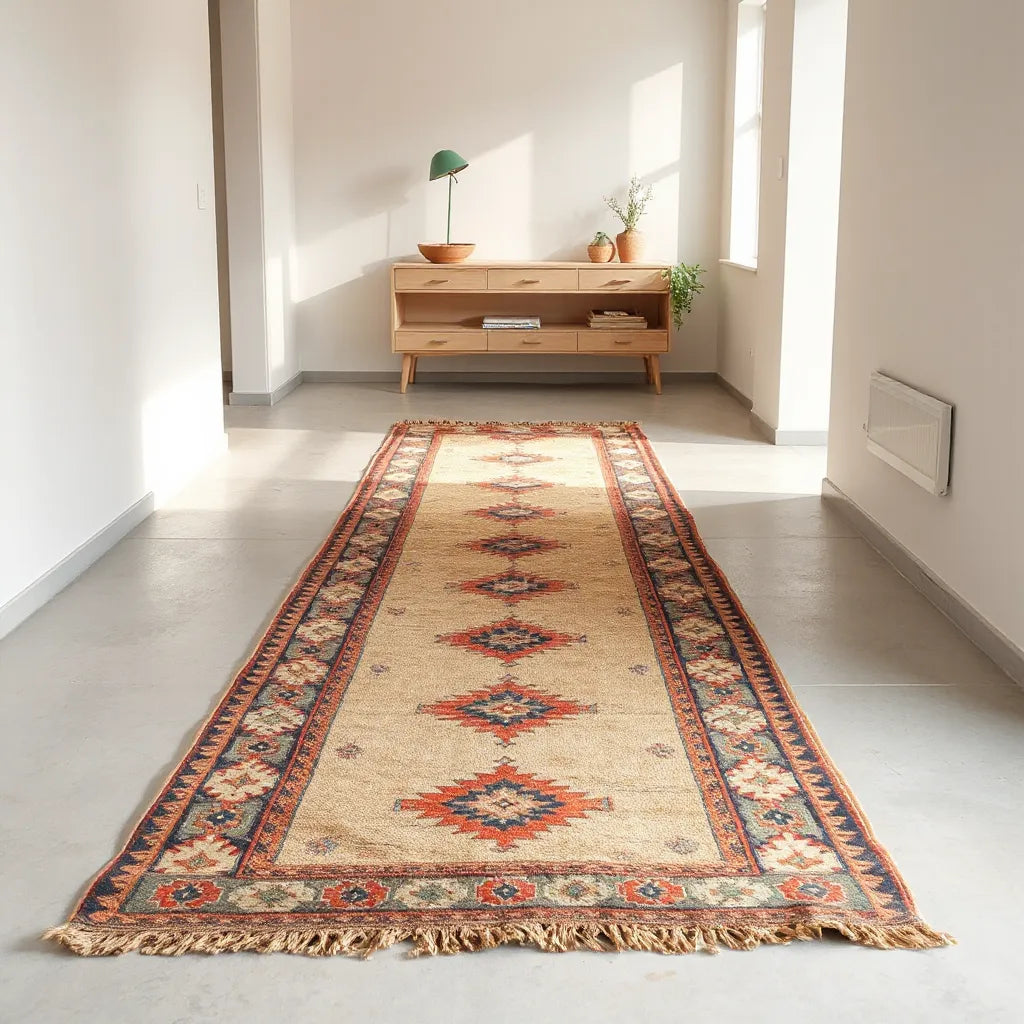
A vintage Turkish kilim runner is a flatwoven textile designed to be longer than it is wide. The key word is “flatwoven.” Kilims are typically made without the high-pile structure found in many rugs. As a result, they offer crisp pattern definition and a flexible, ground-level drape that works well in hallways, entry paths, and adjacent living areas.
What most buyers seek is the combination of heritage artistry and everyday practicality. Kilim runners are often woven with traditional motifs that may include geometric shapes, repeated border systems, and symbolic composition. Even when the exact origin of a pattern is not fully documented, the design logic usually follows a balanced structure that looks intentional, not random.
From a styling perspective, the runner format is especially effective. A corridor can look unfinished when walls and flooring compete for attention. A kilim runner acts as a visual bridge. It introduces a grounded color base, then reinforces rhythm with borders and repeating shapes.

Geometric border rhythm for hallway grounding
2. Myths vs. Facts About Kilim Runners
Many people form opinions about flatwoven rugs before they understand how kilims behave in real homes. Below are common misconceptions and the more reliable reality.
-
Myth: A kilim runner is fragile and cannot handle daily traffic.
Fact: While careful handling matters, properly woven kilims are designed for use. You can protect them further with routine cleaning and thoughtful placement. -
Myth: Flatwoven means it lacks warmth.
Fact: Kilims still add thermal comfort by improving the feel underfoot and softening the hard visual surface of flooring. -
Myth: Color will always fade quickly.
Fact: Fading risk increases with direct sunlight and inconsistent care. With moderate light exposure and regular maintenance, color can remain attractive. -
Myth: Any “vintage” label guarantees quality.
Fact: Vintage condition varies. Evaluate weaving density, edge integrity, and overall wear before purchasing.
3. How to Choose the Right Size and Layout
Choosing the correct dimensions is one of the most effective ways to ensure a vintage Turkish kilim runner looks intentional. Before you measure, decide the role you want the runner to play. In many interiors, the runner should either define a clear path or create a layered effect by aligning with furniture edges.
Start with three practical steps:
- Measure the path: Measure the length of the corridor or entry zone you want to cover. Then measure the width where the runner will sit without restricting movement.
- Plan the margins: Most homes look best when the rug leaves a small buffer from walls or baseboards. This prevents friction at edges and improves the finished look.
- Consider how doors open: If a door swings over the entry area, confirm that the runner does not interfere with clearance.
For living areas, a kilim runner can also act as a bridge between zones. Place it so that the pattern direction leads the eye toward the main seating. If you use it near a sofa, align the runner’s border with a visual line from the furniture for a more cohesive effect.
If you are building a coordinated look with complementary textiles, you can also explore accent pieces such as a matching rug accessory for a cohesive style direction. For inspiration, see vintage Turkish kilim accent rug.
4. Color and Pattern: Matching Your Interior
Color and pattern choices determine whether a kilim runner blends or stands out. In most interiors, a successful design outcome happens when the rug shares at least one color relationship with the room. That relationship can be subtle, such as a matching undertone in wood, or more direct, such as a repeating neutral or terracotta note.
When you evaluate patterns, treat them like architectural elements:
- Borders: Borders frame the rug and provide structure. In long hallways, they create a stable visual boundary.
- Central motifs: Central elements often act as “anchors.” If your hallway is narrow, a calm center helps prevent visual clutter.
- Geometric rhythm: Repetition creates order. Order tends to feel more timeless than overly busy patterning.
For rooms with warm wood tones, kilim runners with earthy reds, muted gold, or natural cream can harmonize with the environment. If your space features cooler greys or minimalistic styling, you can select a runner with softened blues or neutral beige accents.
In practice, many homeowners achieve a confident look by pairing the runner with simple, textural elements. For example, woven cushion covers or plain linen fabrics can balance the energy of geometric motifs. If you are looking for a practical way to add texture around a kilim theme, you may consider complementary home accessories such as coordinated seating accents available at kilim lumbar pillow covers.

Color palette mapping between rug and room surfaces
5. Materials, Weave, and Durability
Kilim quality is influenced by the weave structure, thread integrity, and edge finishing. While different workshops and timelines may use different fiber blends, many vintage kilims rely on strong natural fibers that can endure regular use when cared for correctly.
When assessing a vintage piece, focus on these indicators:
- Edge condition: Strong finishing is crucial for long runners because edges experience repeated contact from feet and furniture placement.
- Even pattern alignment: Clear, consistent pattern work usually indicates deliberate weaving rather than distortion or uneven tension.
- Color consistency: Natural variation can be charming, but sudden color banding may suggest uneven wear or prior exposure.
- Surface integrity: Look for loose threads, thinning areas, and localized abrasions.
Durability is also about context. A runner placed in an entry area will experience different wear than one in a quieter reading nook. Use a rug pad if appropriate for your flooring type. A pad improves stability and reduces friction that can cause gradual wear at high-traffic points.
6. Placement and Styling Ideas That Work
Even the best vintage Turkish kilim runner can look mismatched if placement is not considered. Here are practical ways to integrate a runner without overcomplicating the room.
Hallway clarity with defined borders
In a narrow hallway, place the runner so the pattern borders run parallel to the walls. This creates a clean directional line and reduces the visual fragmentation that can happen when a rug is slightly off-angle.
Layered comfort beside a seating area
If the runner extends into a living zone, keep the surrounding fabrics simple. Layered texture works best when the palette is controlled. The runner should provide the main pattern energy, while furniture fabrics can remain solid or subtly textured.
Entryway focus and practical movement
In an entry area, consider how you walk. Place the runner so the most frequent foot path sits near the center field, not directly on the edges. This helps preserve the border integrity.
If your home includes warmer, more traditional elements, you can balance the kilim’s geometry with classic wood tones. For a refined contrast, explore interior inspirations from American walnut limited edition as a design reference for warm material pairing.
7. Care and Maintenance for Long-Term Beauty
Maintenance is where many buyers either extend a rug’s lifespan or unintentionally shorten it. Kilims can be maintained with consistent, gentle routines that respect their flatwoven structure.
Use the following care approach:
- Regular vacuuming: Vacuum with low suction and avoid aggressive beater bars. Focus on surface dust and crumbs.
- Rotation: Rotate the runner periodically to distribute light exposure and foot traffic evenly.
- Spot cleaning: Blot spills immediately and use mild, water-based cleaning methods only when necessary. Test any cleaner in a hidden area first.
- Professional cleaning: For deeper cleaning, use a reputable textile cleaning service familiar with woven rugs.
When it comes to drying after spot cleaning, allow the rug to dry fully in a shaded, well-ventilated area. Avoid intense heat sources that can stress fibers or shift dyes. If the rug has a dust-trap effect, gentle shaking outdoors can help, but only when the fabric and edges are in stable condition.
Also consider environmental factors. Limit prolonged direct sunlight, particularly through bright windows. A simple window treatment can reduce fading while preserving the room’s natural light.
8. Buying a Kilim Runner Responsibly
Purchasing vintage textiles involves both aesthetic judgment and responsible selection. Instead of focusing only on appearance, evaluate condition, clarity of details, and whether the item is described with useful information.
A responsible buying process includes:
- Assessing condition transparently: Look for visible wear patterns and confirm that edges appear secure.
- Understanding your use case: Determine where the runner will live so that the finish and size match the intended traffic level.
- Prioritizing fit over trends: A classic runner typically remains appealing across seasons and style updates.
- Planning care: If you can commit to routine vacuuming and periodic rotation, you protect the visual quality.
Because vintage pieces may vary, it is wise to treat each runner as unique. The goal is not perfection; it is harmony between the textile’s character and your home’s everyday life.
9. Final Thoughts & Takeaways
A vintage Turkish kilim runner is a practical statement piece that blends heritage design with daily usability. Choose the correct size for your hallway or entry so the runner looks balanced and does not stress edges. Match color and pattern to existing materials to achieve a calm, cohesive visual rhythm. Finally, protect your investment through gentle cleaning, light-aware placement, and careful maintenance. With these choices, the runner becomes more than décor. It becomes part of how your home feels.
If you are ready to explore your options, consider browsing a curated selection of kilim-inspired pieces at Snagva to find a runner that suits your space and your long-term style goals.
Q&A
How can I tell whether a vintage kilim runner is in good condition?
Check edge integrity, look for thinning areas or loose threads, and confirm that the pattern remains aligned across the surface. While minor age-related variation is normal, visible structural instability near borders should be treated as a caution sign.
What is the best way to prevent a kilim runner from shifting?
Use a rug pad suited to your flooring type. Select a pad that improves grip without adding excessive bulk. Regular vacuuming and periodic rotation also reduce uneven sliding caused by accumulated dust.
Can a kilim runner work in a high-traffic hallway?
Yes, with realistic placement and care. Position the runner so your primary walking route stays closer to the center rather than on the edges, and maintain a routine of gentle vacuuming and quick spot treatment after spills.
Should I choose a runner with bold colors or neutral tones?
Both can be correct. Bold colors create a stronger focal point, while neutral tones offer easier pairing with changing décor. The most reliable approach is to match at least one color relationship to your walls, woodwork, or textiles so the runner feels integrated.
About the Author
Snagva Studio
Snagva is a design and product team focused on home textiles, interior styling, and practical furnishing guidance. With expertise in curated vintage-inspired pieces, the team supports customers in selecting textiles that fit real lifestyles and last over time. Thank you for reading, and we hope this guide helps you confidently choose your next vintage Turkish kilim runner.
The content in this blog post is intended for general information purposes only. It should not be considered as professional, medical, or legal advice. For specific guidance related to your situation, please consult a qualified professional. The store does not assume responsibility for any decisions made based on this information.